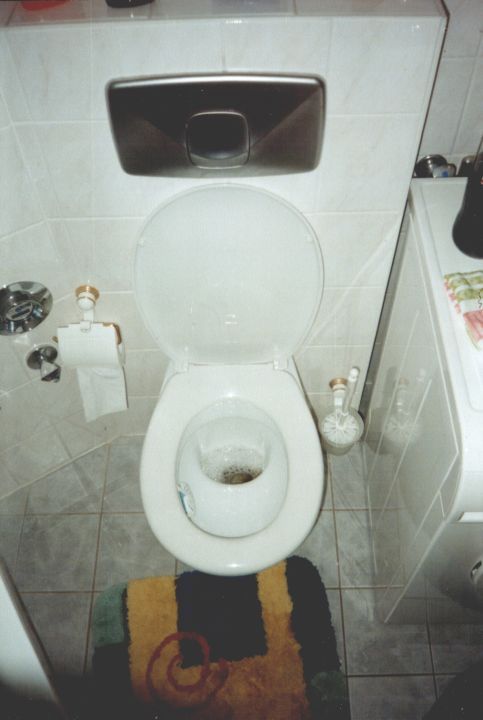
Vor einer ganzen Weile war ich bei einer Bekannten. Diese Bekannte hat gleich drei Toiletten.

Hier ist die Erste:

Name 1_1

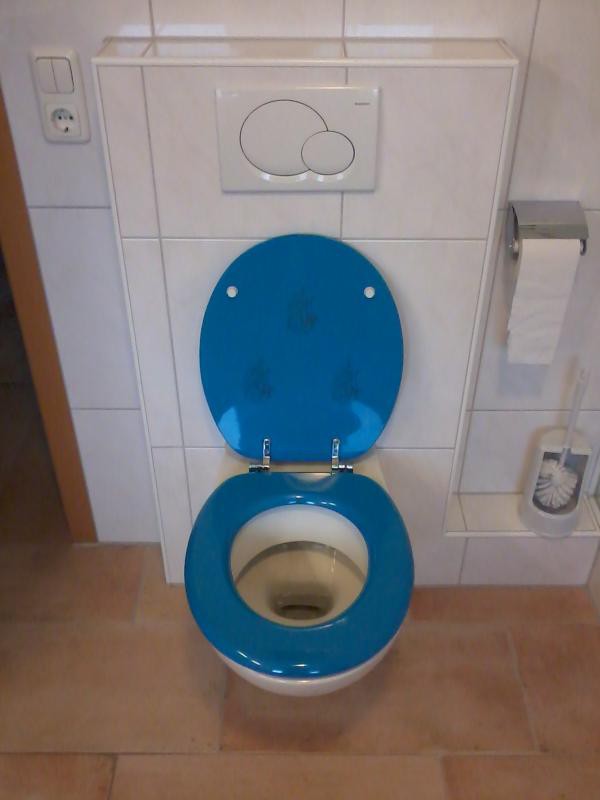
Hier ist die Zweite:

Name 1_2

Der Toilettensitz dieses Klos gefaellt mir am besten.

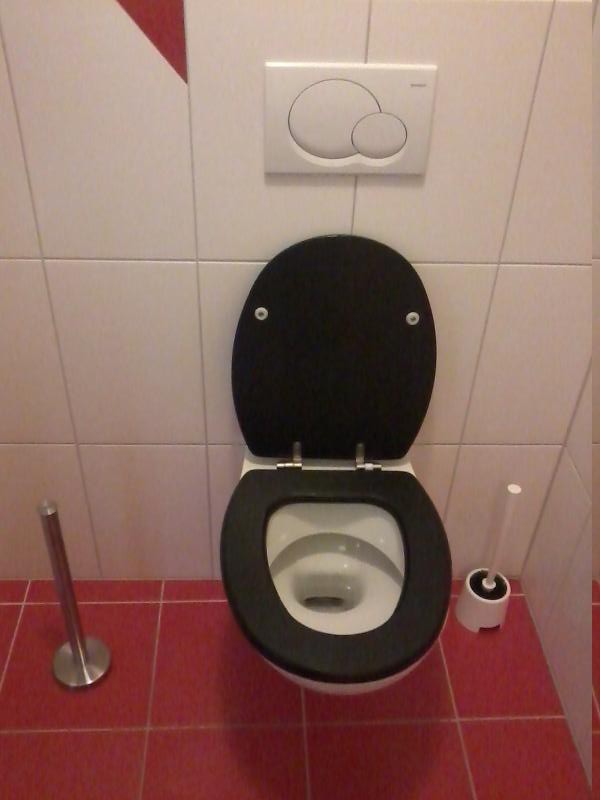
Und die Dritte:

Name 1_3

Das Einzige, was alle drei gemeinsam haben, ist die Spuelknopfarmatur und mich duenkt auch die Porzellanschuessel.

Drei Klos zu haben fetzt!


Neulich hat LeSpocky mich nochmal extra auf „Science Biggest Fail“ hingewiesen. Ich find das immer toll, durch solche Sachen den Eindruck zu bekommen, dass „die Leute“ mir doch zuhøren und das von mir Gesagte sogar halbwegs richtig einsortiert bekommen. Selbst wenn die e-Mail mit dem Link unverschluesselt war.

Aber darum geht es mir hier gerade gar nicht. Auf das im Artikel Gesagte werde ich an anderer Stelle nochmal Gesondert eingehen.

Mir geht es vielmehr um einen Text, den ich vor ueber 3 Jahren schrieb. Dies im Zuge der Gespraeche mit meinem damaligen Psychologen (deswegen ist der auch auf englisch).
Ich hatte den damals auch so geschrieben, dass der hier verøffentlicht werden sollte. Aber irgendwie hab ich mich fuer so viel „Inneres heraus kehren“ geschaemt. Und dann war es irgendwie nicht mehr aktuell.

In den letzten Monaten hab ich immer mal wieder dran gedacht diesen Text doch noch zu verøffentlichen. Aber es mangelte der Anlass und mir mangelte es nicht an anderem Material.

Wie immer bei vor laengerer Zeit geschriebenen Texten gilt, dass ich mich heute nicht mehr immer so ausdruecken wuerde. Dies hauptsaechlich, weil ich in der Zwischenzeit noch mehr gelesen und dazugelernt habe und mittlerweile einige Dinge ganz anders „einsortiere“ oder unter anderen Blickwinkeln betrachte.

Wie bereits an anderer Stelle, bereitet mir die inhaltliche Ueberarbeitung geschichtlicher Dokumente allerdings irgendwie Bauchschmerzen. Deswegen ist der folgende Text nur bzgl. der grøbsten Rechtschreibfehler korrigiert worden. Auszerdem fuegte ich Links ein (und løschte entsprechende Quellverweise), ordnete die Absatzstruktur, so dass der ganze Text lesbarer ist und hob ein paar wenige Textstellen hervor.

Nach dieser kurzen Einfuehrung nun der vergessene Artikel:

– – – – – – – – – – – – – – – – – – – –

Science

First I’d like to start why science in the original meaning was and is so important to me.
In the original meaning science „is a systematic enterprise that builds and organizes knowledge in the form of testable explanations and predictions about the universe“ and it has (had) a close connection to philosophy.
As the famous physicist Sommerfeld stated once: each physics student must have the chance going directly from a physics lecture to a philosophy seminar – (successfully) opposing the move of the physics seminar rooms to new buildings of the Ludwig-Maximilian University in Munich early in the 20th century.
I strongly agree with him but would also include other important sciences like sociology, politics, history, literature etc.

Nowadays „science is a term which […] is often treated as synonymous with ‘natural and physical science’“ [Anm: Urspruenglich aus der wikipedia, dort aber nicht mehr zu finden.] – strongly directed towards Karl Popper’s understanding of science (as far as I’m able to understand Popper).

Anyway, I strongly disagree with this limited meaning of science. Maybe my early understanding of science explains best why: I think science is everything that helps to understand the universe (and humans and their behaviour are a part of the universe) and to propel humanity. Of course reproduceable methods and logic must to be used to attain this understanding. These methods can be applied to and within rather „strange“ topics as long as the results are not claimed as valid in the real world (which doesn’t necessarily mean that the results don’t have any implications in the real world – e.g. theology and the whole „christian frame of faith“).

So far to what I mean when I say „science“ in the first and second part of this „essay“ (if not stated otherwise). This is a rather difficult topic and I just
read about a tiny bit of it and understood even less. Much more intelligent people than I am wrote extensively about it. Later I will come back to this
topic.

In retrospective science meant so much for me because it was the only object/matter/thing which was kind to me without conditions (beside my mother).
I have to admit that this is a rather heavy statement. I never had somebody who could be labeled as „friend“ before I was 19/20 years old. Actually I’ve never been very interested in direct social relations (which is still the case but to a lesser extend) even though I was and am very interested in sociology.
During my childhood this is easy to explain I guess: I was bullied (fortunately not very much), the other kids usually were kind of „slow“ in understanding me and they couldn’t explain the things I wanted to know. I wanted to know how the world functions – why is wood swimming (which it doesn’t do in space by the way), why is a mirror mirroring, why is the sky blue, what is the world made of etc. – the reason why I studied physics and why I would do it again.
Now that I know this stuff (or am able to understand explanations in this direction) my interest shifted more towards understanding society, humanity and the behaviour of humans and human constructions (e.g. religion, states, companies etc.).

However, this explains quite good I guess why I say „science was kind to me“ because the deeper I „digged into“ a topic the more I learned, the easier I understood other things. The more I gave (timewise) to science the more I got back. When I was 14 years old I read a whole encyclopedia. My intention is not to boast with this but this were one of the most happy two weeks during my youth – each new page meant more knowledge, more understanding and peace of mind ([figuratively] since I was on the „hunt“ for more knowledge and literally too since other people left me alone).

So I started studying physics. At this time I already was an acolyte of the „religion of science“ (new meaning) and deeply entangled in the new meaning of science (without knowing it).
Fortunately mostly my subconsciousness, and to a lesser degree also my active thinking, was aware of the original meaning of science.
Thus hearing professors (until to this point I always consideres them as the „spearhead of intelligence“) speaking in a mean way about the humanities and socials sciences, not considering them as „real“ science at all, lead to the first disappointments early during my studies. Over the years hearing from most of the students that they study physics because of the good jobb opportunities lead to more disappointments.

Since I was a devoted acolyte I must not go in detail why I became successful within this „reference frame“ named as science/physics. I’ve been, and to a lesser degree this is still the case, a rolemodel for all these neo-liberal politicians. Coming from a poor family, studying something that is „important“ and becoming successful through „hard and devoted work“.
I was totally aware of that and did not held back with my belief that this is true. Now I know that I’ve been very cruel to all the people who haven’t been that fortunate as I was (especially with respect to the topic they studied). At this time everything seemed OK with my behaviour.

However, in 2004 my world broke apart – totally. But the foundation still was intact – my belief in science. Everything else I had to build up from scratch.
The catalyst for this event was the break-up with my then girlfriend. Since my mind was already shattered because of this it was kind of „silent“ enough to make me realize that everything in my life just does not „add up“. So I started to talk. About my feelings, about social topics, human relationships, economic topics, other (scientific) topics beside physics or technology etc.
And I started to accumulate knowledge within these new (to me) topics. This was the time when I started visiting seminars in politics and sociology.

And again science helped me – getting my world together again. A new world, a world in which I became a different, maybe better, person with totally changed views on quite a lot of important topics with respect to social interaction. This was a long process which still (and never will be) finished.

This was also the time when my subconsciousness became aware of the religion of science, slowly and just in small pieces making it tangible for my
consciousness.
And this was the time when my consciousness became very well aware of the business around science. Even more so during the time I worked for my
dissertation.
Both of these I strongly reject because these are unscientific.

– – – – – –

The Business of Science

I tried to explain why science is so important to me in the first section.

Naturally this first section already had to go a little bit into other the topics I will eventually describe/discuss in detail below.

This section now shall cover what I mean with „the business of science“.
It will be a rather short section and will not have any further meaning for the later topics but it is important to point out the differences between the business OF science and the business AROUND science. Still the original meaning of science applies of not said otherwise.

The most important business of science is of course what I said above: helping to understand the universe and to propel humanity. This includes research but is not limited to it. It includes also the presentation of research results (in a reasonable way) and teaching of the scientific methods and the necessary knowledge to students.
The first of this is kind of obvious since „secret-science“ doesn’t help humanity. Additionally, research at a university usually is done with taxpayer money and the public should be informed about what has been done with it’s money. The latter is important to continue with science in the future.

Presenting research results is for some scientific fields more important than for others since some sciences extend more into the „everyday life“ (e.g.
medicine, didactics etc.).

The „taxpayer money argument“ leads to another important business of science. To give advice for general decisions which will influence society. This includes political decisions but is not limited to it. On the other hand, if Herbert Read’s opinion about the „politics of the unpolitical“ is reasonably extended to the „topic of science“ all major decisions in this area are political.
This is something I would agree in.

I think I have to extend this a little bit because one big issue in the next section is also covered within this „giving advice“. In my opinion public research/science should be covered in general by some kind of „money for science/research“ without conditions. It shouldn’t be the case that a researcher/student has to beg even for tweezers because the lab he or she is working in get’s not enough funding.
Nowadays each tiny project must apply for funding and compete with others. This is a tremendous waste of ressources (but this will be covered in the next section) and in the end the taxpayer will cover the costs anyway!

However, not all (resonable) big projects can get money. Therefore such projects must be evaluated and the best project should get the money. Usually just scientists are able to evaluate other scientific projects, therefore they should do it. What „best“ means is of course debatable and can be both a political or a scientific discussion.

All these businesses (beside research and teaching) should be kept to a reasonable minimum that the scientists can do science.

– – – – – – –

The Business around Science

Above I tried to describe what „science“ means to me and that scientists have to do some things due to something which maybe could be charactereized as „their duty to society“. As a famous german physicist stated it shortly after the catastrophy of the 2nd World War: It’s not an option that physicists become political we MUST be political.
This was also said with respect to the atomic age which just begun with all it implications of total annihilation of mankind.
That is in the sense of the above mentioned position of Read.

Whatsoever, as said above the original meaning of „science“ shifted in the past decades more and more to a meaning that just natural and physical sciences are consideres as „real“ sciene. This angers me and will be discussed more in detail in the next section.

Together with this shift in the meaning the business around science developed. To me it seems to be as if science nowadays must lead to immediate results. Even better if it leads to commercialisation of the idea in the not to long run.
Everything else is considered useless and not worth of funding (public and private).

Since I didn’t researched this with the proper methods I want to give some examples what I mean with the business around science. These are mostly my own observations. From here on the word „science“ is meant in it’s new meaning.

For most science students the main motivation to study their topic is not curiosity but „to get a good jobb“. I think this is a terrible motivator because
you can’t be really good in something if you are not passionate about it. Of course this again is the expression of some others dogmata of the modern western society which shall not be discussed here.

Especially physics students (but this applies at least to most of these students according to my observations) are also quite arrogant towards everything which is not „real“ science.

Since professors have to „fight“ for there money most of them are almost always very occupied with applications for funding. This gives them much less time for good research. I know TWO professors who spend at least some time in the lab.

This might be less the case for more theoretical research areas, but these usually don’t need so much funding. On the other hand all of the professors I
know are working often until late at night just to get these applications in order. Since a day just has so many hours the professors can’t spend enough time with there students.
To me it seems to be as if some professors even see the students as too much of a burden. Hence the „outsourcing“ of these tasks (like teaching or supervising) to postdocs and PhD-students.

According to a friend who is a associate professor „being in a committee“ is much better for the scientific career than teaching.

Everything must be good looking in statistics. This leads to more seminars (even though the existing ones are quite often not good visited or the students just go there because they have to).

Also the flood of really bad publications (both papers and conference contributions) fit into this.
Around the topic of „publications/papers“ the bad business of Elsevier and other companies which distribute scientific papers should be mentioned.
The details of this are described elsewhere. A good starting point might be the article „The price of information„.

Since the tasks of a professor are nowadays more kind of bureaucratic quite a lot of them shouldn’t be considered anymore as the „spearhead of intelligence“.
This includes their research.

Three question (instead of direct examples) to finish this.

All this fuss around patents is another business around science. How can it be that the „fruits“ of public funded research is NOT for the benefit of the whole society?

How can it be that teaching in the laboratory (incl. own experiments) – the best (and I would even say the most efficient) way to teach science students – is more and more slashed because it is expensive and doesn’t contribute much to the statistics?
Even the students moan about it but not because it is very time consuming or hard but it doesn’t give many credit points according to the invested time.

And last but definitely not least: how can it be that applications for money for expensive equipment need several years to be written? And not because of the „hard science“ involved but because of „political issues“.
And how can it be that such applications need the constant attention of the scientists but in the end just a very short section of the application is actually relevant with respect to the research intended with the instrument in question?

I could go on quite a while with more examples but I will stop it here. I hope the examples itself are obvious enough not to be in the original meaning of
science.

In close connection to these businesses around science is that science became a religion (which is also just another business around science). This will be
discussed in the next section.

– – – – – – –

Science as Religion

In this sction the word „science“ is meant again with the new meaning (except stated otherwise).

Why science is a religion has been discussed by Mary Midgley (and maybe others I’m not aware of) and this is not the place to repeat her very good arguments. But for the sake of clarity I have to repeat at least some of the things she wrote.

It is important to distinguish between „faith in something“ and „religion“.
Midgley presents the key points how to distinguish a religion from faith. Faith is something which she argues is something very important even in science.
I agree with her. We all believe in something. For the people I keep company with it is usually not a being with supreme powers, but almost all believe e.g. in democracy or in mankind. We don’t have any proof that this faith is justified, actually we have a lot of examples that this faith is quite unjustified, but still we believe in it. Otherwise I guess we wouldn’t function in this society.

When it comes to science (new meaning!) I hope I could describe that I’ve been a devoted worshipper in the past. This was certainly not for the better of me but I didn’t realise this at that time. Especially was this attitude totally contrary to what I strongly believe about religion (with all the evidence one actually could say „what I know“ instead of „what I believe“).

I think EACH kind of religion is bad – if it is christianity, science, the cult of leadership etc. Beside the obvious facts the most important reason to me is,
that religion always is accompanied by unquestioned dogmatism.

Dogmata per se must not necessarily be something bad. Actually they can be something good. For example do I have the dogma that spanking a child for disobedience is an unappropriate response by the parents and not at all included in my repertoire how the upbringing of my child should be.
This sounds logic and moraly totally ok, doesn’t it. But just look two generations back and it was logic and morally totally ok to spank the child. Actually in germany the law that parents have the right to spank their child was not abandoned before the year 2000. Despite the fact that each human has the right not to be harmed (except extremely extraordinary circumstances) was established many decades before. And even this was just done after almost 30 years of lobbying of the child protection agency (Kinderschutzbund).

Another examples is my dogma not to have any sympathy or understanding regarding nazis and their ideas whatsoever. I’ve really tried it, but I couldn’t. I became physically sick and was disgusted of myself just by trying. Sounds logic, doesn’t it? (The dogma, not that I become sick of trying to understand nazis.)

Nonetheless I have another dogma which lead to that I always fought, and will do so in the future, for the civil right (of the nazis) of freedom of thought and speech (which doesn’t mean that I wouldn’t dispute it). Just like Voltaire.
Sounds also logic, doesn’t it? But I have the feeling that it is kind of contrary to the first dogma. Why protecting humans and ideas that want to destroy me and my ideas?

In addition comes that both of these [dgomata] can’t be understood in different kind of social habitats. Whereas the social habitat for not understanding the last dogma is much bigger than for the first – and alarmingly big under the so called „intelligentsia“.

I apologize (even though I’m not sorry – another dogma: don’t be sorry for the things you believe in) that I got carried away a little bit with these two
examples. These shall serve for dogmata which usually are not consider as such by most people.

In the last couple of months I tried to figure out my dogmata and I questioned all of the ones I found. Some I found as not abandonable (e.g. spanking my son), some I don’t desire to abandon (the nazi thing), and some dogmata which have been central for me and my lifestyle I could figure out as useless, even harmful to me, and I abandoned them (or I’m on my way abandoning them).

The key point is: dogmata MUST ALWAYS be questioned. Just as Bertrand Russell already told us half a century ago. Because something which morally is considered as good might actually be bad. Usually history goes this path, but it takes a while, often it is in the „reverse-mode“ (as for the time being unfortunately) and I don’t live that long.

I hope that one can extract from the few sentences i wrote my point of view that UNQUESTIONED dogmatism is something bad (which is by the way just another dogma). Beside the things I said above it (very effectively) prevents people from learning and exploring (the universe). And Religion (in contrast to faith) does not function without dogmatism.

And here we have the connection between the first and the last section. Science (in the original meaning) and Religion are two things which do absolutely not go together.

In contrast to science and faith which I consider as complementary.

In addition comes that I strongly believe in individuality (while I still stress out how important social/societal duties are).
And religion is everything BUT individuality. In contrast to faith again which can be very individual.

And all this is the reason why I’m so mad about science and the scienists. It became a religion and the scientists are very happy about this (without knowing it) because it gives them power. As all religions does to the altar boys and priests – and power is something almost everybody likes.
This power „thing“ is something I’ve been aware of all the time – I guess it even was a motivator for me going into science. Something I’m not very proud of (now).

This is one reason why I can’t stay in such close connection with science (new meaning) as I have been in the past and as I’m now. Together with other reasons all this contradiction ate me up and made me sick to the point that I stopped functioning in this context.


To finish all of this I like to state, that it is very hard to question myself.
But some years ago – 2004/2005 – I realized in a different, more narrow context that not doing so means deadlock. Something to avoid under all circumstances because it means death.
Advance – as the opposite of deadlock – on the other hand means to enjoy life and myself. The reson why I’m so eager to learn and to improve myself; the reason why science in the original meaning is so important to me.

hm7

… gibt es in dem Artikel mit dem eindeutig zweideutigen Titel: „Deep Inside: A Study of 10.000 Porn Stars and Their Careers„.
Passt ja auch sehr zu dieser Kategorie.

In dem Titel zu meinem (diesen) Artikel steht „noch mehr“ deswegen, weil ich selber ja auch mal Statistiken hier ausfuehrlich besprach und „Spasz“, weil annehme, dass ihr, meine lieben Leserinnen und Leser, grosze Freude an eben diesen Artikeln hattet.

Zu einem spaeteren Zeitpunkt werde ich auf Porn uebrigens nochmal zurueck kommen. … … … .oO(Damn! Wortspielkasse!)

Eigentlich interessiert mich ja nicht die Haeufigkeit einer bestimmten Zeichenkette. Wirklich von Interesse ist die Streuung der Haeufigkeiten der Zeichenketten.
Oder einfacher (aber mit mehr Worten) erklaert: wenn bspw. die Zeichenkette „1234“ fuenf Mal vor kommt, so møchte ich wissen, wie viele Zeichenkette auch fuenf mal vorkomen. Dabei interessiert es mich nicht die Bohne, welche Zeichenketten das sind.
Bestimmte Zahlen weisen eine gewisse Haeufigkeit auf und mich interessiert es, wie oft diese Haeufigkeit auftritt. Hier vermute ich die Normalverteilung.

Aber schauen wir uns doch konkrete Daten, fuer vierstellige Zeichenketten, an:

09_wie_oft

So lange die Anzahl der Stellen in der Folge nicht ausreicht, damit jede Zahl mehr als ein Mal auftreten kønnte, ist natuerlich keine glockenførmige Verteilung zu erkennen. Dies sieht man in diesen vier Grafen.

Wenn die Folge nur 10 Zeichen lang ist, so kommen ca. 10.000 vierstellige Zeichenketten genau null Mal vor. Und ein paar wenige ein Mal.
Je laenger die Folge wird, desto mehr Zeichenketten kønnen ein Mal vorkommen (bis 100 Stellen) und irgendwann auch øfter als ein Mal (bis 1000 Stellen). Allerdings nimmt das Vorkommen høherer Haeufigkeiten exponentiell ab. Was zu erwarten war.

Ab einer Folgenlaenge von 10.000 Zeichen, kommt im Schnitt jedes Zeichen genau ein Mal vor. Das hatte ich ja bereits letztes Mal gezeigt.
Man beachte, dass die Ordinate nun linear ist!

Und wenn die Folge weiter waechst, so stellt sich auch eine glockenførmige Verteilung ein:

10_Normalverteilung_1

Aber HAEH?! Wieso liegt denn die schicke rote Kurve (vulgo: der Fit) nicht auf den Datenpunkten? Und was ist dieses komische „Chi“?

Dies liegt daran, weil diese schøne rote Kurve den Daten angepasst wurde, unter der Annahme, dass diese normalverteilt sind. Und hier kommt Chi ins Spiel. Chi ist ein Ausdruck fuer die Guete des Fits. Je høher dieser Wert, desto schlechter stimmen die Daten mit der Annahme ueberein.
Oder andersherum: das Datenauswertungsprogramm passt die Parameter der Kurve derart an, dass Chi so gering wie møglich wird. Nicht, dass es am Schønsten aus sieht.

Demnach kønnte man sagen, dass bis zu einer Folgenlaenge von 100.000 Stellen fuer vierstellige Zeichenketten NICHT normalverteilt ist.

Aber wie das rechte Bild zeigt, so scheint sich sich die Verteilung einer Normalverteilung anzunaehern, mit zunehmender Folgenlaenge.

Und hier nun, ENDLICH, kommt das, worauf ihr, meine lieben Leserinnen und Leser, so lange warten musstet:

Bei einer Fibonaccifolgenlaenge von 100.000.000.000 Stellen, meine ich, dass man durchaus davon sprechen kann, dass vierstellige Zeichenketten normalverteilt sind. Toll wa!

Dies gilt insb. auch fuer kleine Vorkommen, was die logarithmische Darstellung im rechten Bild eindrucksvoll zeigt.

Damit hatte ich endlich herausgefunden, was ich herausfinden wollte. Natuerlich nur innerhalb meines eigenen, mathematisch nicht so anspruchsvollen Rahmens.
Und ihr, meine lieben Leser und Leserinnen, wisst es nun auch.

Es ist Zeit fuer die naechste Minitoilettenbilderserie. Oder vielmehr Toilettenbilderminiserie.

Diesmal werde ich euch die Toiletten von Leuten zeigen, bei denen ich zu Besuch war.

Der Anonymitaet wegen werde ich nicht sagen, zu wem die entsprechende Toilette gehørt. Dies wird im Verlauf der Serie zu repetitiven Artikeltiteln fuehren.

Es gilt: Wer die Toilette erkennt, ist aufgefordert ein Kommentar zu hinterlassen, mit einem diskreten Hinweis, wem diese Toilette zuzuordnen ist.

Los geht’s mit diesem schønen Exemplar:

Bei - in Berlin

Ein feines Handtuch dort an der Wand.

.oO(Da haette ich doch fast den Namen des/der Toilettenmeistbenutzers/benuterin im Bilddateinamen gelassen.)

Hier hatte ich ja schon etwas geschrieben.

Und auch im Zusammenhang mit der Zahl des Sohne des Bonacii steht der goldene Schnitt.
Der kommt ja auch sehr haeufig in der Natur vor.

Und weil „die Leute“ sich sowas oft nicht erklaeren kønnen, und Schønheit wohl in deren Weltbild nicht die Erlaubnis hat einfach so ohne Grund zu existieren, wird das dann oft auf ein Hirngespinst geschoben. Eine typisches Beispiel findet man hier. Wobei es natuerlich gute Gruende gibt, warum der goldene Schnitt so oft in der Natur vor kommt. Aber darauf will ich hier nicht eingehen.

Jedenfalls haben solche Leute auch die Meinung, dass eine andere Zahl, naemlich die Sechshundertsechsundsechzig, eine „bøse Zahl“ waere. Denn es ist wohl die Zahl des Bieres.

… Tihihi … witzig! In meinem Weblogerstellungssoftwarelinkerkennungsfenster steht jetzt „Bibel“ direkt vor „666“ … aber ich schwoff ab.

Zu diesen Leuten møchte ich gern mal sagen, dass sie doch mal …

-2 sin(666^circ)

… ausrechnen møgen :P

Nun rechnete und rechnete mein kleiner braver Laptop 15 Stunden ohne Unterbrechung und heraus kamen viele Zahlen.

Es werden nur noch die Daten fuer vierstellige Zeichenfolgen betrachtet.
Drei-, zwei- und einstellige Zeichenfolgen passen in das Modell gut rein, es sieht aber nicht so schøn aus. Also vom aesthetischen Anspruch mein ich.
Dies, weil sich bei nur 1.000, 100 bzw. 10 Datenpunkten statistische Schwankungen noch deutlich negativ auf das Erscheinungsbild auswirken kønnen, selbst wenn diese einer Normalverteilung folgen und mathematisch somit alles in Ordnung ist. Bei 4-stelligen Zeichenketten habe ich aber 10.000 Datenpunkte und die Schwankungen folgen einer schønen Glocke. Aber so weit sind wir ja noch gar nicht.

Wie sieht denn nun so eine Verteilung von 4-stelligen Zeichenketten aus. Im folgenden Bild stelle ich dies beispielhaft dar, fuer Fibonaccifolgenlaengen von 100, 10.000 und 1010 Zeichen.

Hier gezeigt ist die Entwicklung der Haeufigkeiten der Zeichenketten von „0900“ bis „1000“.

Bei einer Fibonaccifolgenlaenge von nur 100 Zeichen, kommen auch nur ca. 100 vierstellige Zeichenketten vor. Also im Durchschnitt kommt jede von den 10.000 vierstelligen Zeichenketten 0.01 mal vor. Dies zeigt die linke obere Verteilung sehr deutlich.

Bei einer Fibonaccifolgenlaenge von 10.000 Zeichen, kommt jede vierstellige Zeichenkette im Schnitt genau ein Mal vor. Dies bestaetigt die rechte obere Verteilung.
Hier spielt uns die menschliche Wahrnehmung aber einen Streich. Es scheint, als ob Haeufigkeiten von 2, 3 und gar 4, mal deutlich die Zahl der „Nullvorkommen“ ueberwiegen. Dem ist aber nicht so. Manuelles Nachzaehlen ergab, dass alle Haeufigkeiten die ueber eins liegen, die „Leerstellen“ ziemlich genau „auffuellen“, so dass im Durchschnitt eine Haeufigkeit von eins heraus kommt. So wie erwartet.

Bei einer Fibonaccifolgenlaenge von 1010 Zeichen ist die Erwartung, dass jede vierstellige Zeichenkette durchschnittlich eine Million mal auftritt. Dies sieht man in der linken unteren Verteilung bestaetigt. Im Balkendiagramm von 0 bis 1.000.000 gehen die Feinheiten aber unter. Deswegen ist unten rechts der Bereich der Verteilung um den Wert „1.000.000“ aufgespreizt zu sehen.

Und hier beginnt es interessant zu werden.

Dieses Zappeln um den Mittelwert ist ja das eigentliche Ziel meiner Fragestellung. Ist das normalverteilt?
Wie haeufig eine bestimmte Zahlenfolge vorkommt, ist also ueberhaupt nicht von Interesse. Aber wie sich die Haeufigkeit eben dieser Zahlenfolge von den Haeufigkeiten aller anderen Zahlenfolgen unterscheidet, DAS ist das Interessante. … Das Zappeln um den Mittelwert halt.

Ich kønnte hier gleich das Ergebnis praesentieren. Das waere aber langweilig.
Zunaechst einmal schauen wir uns das Zappeln und die Entwicklung des Zappelns ein bisschen naeher an.

Zur Analyse ist es unpraktisch, sich die Rohdaten anzuschauen. Da erhaelt man keine wesentlichen Informationen, denn ich habe ja prinzipiell 10.000 verschiedene Haeufigkeiten. Nun ist meine Vermutung aber, dass es deutlich wahrscheinlicher ist, dass das Vorkommen einer Zeichenkette um den Mittelwert liegt, als fern ab davon. Um dies besser zu „sehen“, erstellte ich fuer jede Potenz der Fibonaccifolgenlaenge ein Histogramm der Haeufigkeiten vierstelliger Zeichenketten. Bei diesen Histogrammen „mittelte“ ich derart, dass ich 100, gleich weite Balken hatte. Dieses Histogramm sollte dann natuerlich einer Normalverteilug entsprechen. Dazu aber an anderer Stelle mehr.

Es gibt die folgenden interessanten Grøszen:
– maximales und minimales Vorkommen;
– die Differenz daraus ergibt die Fehlerspanne;
– „DeltaMinus“ und „DeltaPlus“, der maximale Betrag der Abweichung vom Vorkommensmittelwert nach unten bzw. nach oben;
– eine Groesze die ich „relativer Fehler“ nenne: Quotient aus Fehlerspanne und Mittelwert.

Dies alles natuerlich in Abhaengigkeit von der Laenge der Fibonaccifolge.

Maximales und minimales Vorkommen sind nur in so fern von Interesse weil sich daraus andere Daten ergeben.

„Delta Minus“ und „Delta Plus“ haben eigentlich keine Bedeutung. Aber ich wollte gern mal wissen, ob die Abweichung nach oben tendentiell grøszer ist, als die nach unten (oder umgekehrt).

Bis zu einer Fibonaccifolgelaenge von 10.000 Stellen war das minimale Vorkommen immer null. Natuerlich gab es Zeichenketten, die ueberhaupt nicht aufgetaucht sind, wenn es nur so wenige potentielle Zeichenketten ueberhaupt gab.
Das maximale/minimale Vorkommen nimmt, wie zu erwarten war, exponentiell  zu, nachdem die Fibonaccifolge eine Mindestlaenge von 10.000 Zeichen ueberrschritten hat.

Der Betrag des maximalen Abstands vom Vorkommensmittelwert nach unten (DeltaMinus, rote Punkte im unteren Grafen) ist zunaechst immer grøszer als der Abstand nach oben (DeltaPlus, schwarze Punkte im unteren Grafen). Erst im ganz letzten Messwert kommt es zu einem Umschlag dieses Verhaltens. Erwarten wuerde ich, dass es hierbei keine Praeferenz gibt. So weit scheinen die Daten allerdings Letzteres zu suggerieren. Mehr Daten sind vonnøten und ein strenger mathematischer Beweis dieser Behauptung.

Die Fehlerspanne nimmt exponentiell zu. Der Abstand zwischen der Zeichenkette die am seltensten vorkommt und derjenigen, die am haeufigsten vorkommt, wird also absolut gesehen immer grøszer.
Auch dies ist so zu erwarten gewesen, kann sich das Vorkommen aller Zeichenketten bei laengeren Fibonaccifolgen doch ueber grøszere Bereiche „ausdehnen“.

Deswegen fuehre ich den „relativen Fehler“ ein. Auch wenn die Fehlerspanne immer grøszer wird, so wuerde ich erwarten, dass diese Fehlerspanne bezogen auf den Mittelwert des Vorkommens aller Zahlen abnehmen sollte. Die Haeufigkeiten sollten sich also relativ gesehen mehr und mehr an den Erwartungswert „anschmiegen“.
Diese Vermutung kommt _mir_ total natuerlich vor, weil ich eine Normalverteilung aller Zeichenketten annehme. Wenn ich aber mal so drueber nachdenke, dann beruht diese Annahme nur auf so ’nem „Bauchgefuehl“. Und wenn ich so weiter drueber nachdenke, dann werde ich mir unsicher, ob nicht selbst bei einer Normalverteilung der Werte, der relative Fehler immer grøszer werden kønnte … wenn also die Fehlerspanne schneller zu nimmt, als der Mittelwert grøszer wird … nein … mich duenkt, bei einer Normalverteilung kann dem nicht so sein. Aber eine Begruendung muss ich schuldig bleiben. Jedenfalls ist fest zu halten, im Allgemeinen kønnte der relative Fehler auch gleich bleiben, oder sogar zu nehmen. Wenn dem aber so waere, dann waere vermutlich die Annahme einer Normalverteilung falsch.
Jedenfalls ist in der Abbildung gut zu erkennen, dass meine Vermutung richtig war und im Umkehrschluss mglw. auch die Annahme der Normalverteilung. Dazu aber nicht mehr in diesem Beitrag. Auf dieses wunderschøne Ergebniss muesst ihr, meine lieben Leserinnen und Leser, euch bis zum naechsten Mal gedulden.

Zum Abschluss des Beitrages noch das Folgende.
ACHTUNG! Die Definition „_meines_ relativen Fehlers“ hat nichts mit dem relativen Fehler zu tun, wie er vom Studium und aus der Mathematik her bekannt sein sollte. Dieser wird naemlich bspw. fuer einzelne Messwerte angegeben, als (relative) Abweichung vom wahren Wert. Hier habe ich aber ein Ensemble von Messwerten und betrachte die Gesamtheit.

Da gehe ich so durch meine Toilettenbilder um zu schauen, welches feine Ørtchen ich euch, meinen Leserinnen und Lesern, als naechstes praesentieren kønnte und da faellt mir auf, dass mir doch glatt ein Klo entgangen ist, bei der Miniserie „Toiletten in Bildungseinrichtungen“.

Aber hier ist es nun. Das Stille Ørtchen des Mathaeser Kinos in Muenchen:

Mathäser Kino München2

An der Werbung auf (!) den Urinalen kann man ich erkennen, dass man ich im falschen System lebt lebe. Ehrlich? Jemand hatte diese Idee und wer anders dachte, dass es sich dabei um eine gute Idee handelt und sorgte fur die Realisierung?
So politisch kann das Klo sein … bzw. meine Kunst

Wieauchimmer, hier die Sitztoilette:

Mathäser Kino München

Etwas verwackelt, aber das ist schon ok so.


Solsiden ist so’n Shoppingcenter. Die haben da auch (semi) øffentliche Toiletten.

Solsiden

Rot … eine Farbe die man eher selten sieht im Zusammenhang mit Toiletten. Warum ist eigtl. alles immer irgendwie blau, wenn es vom ueblichen weisz/grau/schwarz abweicht?

Solsiden 2

Mhm … gehen sie bitte weiter. Hier gibt es nichts interessantes zu sehen.

Den Film fanden „alle“ so SUPERKRASS, … … … moment … hier kommt mir gerade mein vor kurzem fertig gewordenes, von mir selbst programmiertes, Archivierungsprogramm echt zu gute; ein Glueck, dass ich eine Suchfunktion eingebaut habe … … …

Von vorne. .oO( file.seek(0) … tihihi … *lacht-sich-kaputt-ueber-laue-programmierwitze*)

Von allen Menschen die ich so kenne, war ich der Erste, der Sin City im Kino sah.
Damals. In Tempe, Arizona:

2005-04-17_16-15

Ich fand den toll. Zu der Zeit war der was Besonderes. Sequentielle Kunst als Film. Also nicht nur ein Film, basierend auf sequentieller Kunst. Sondern auf mehreren Ebenen so nah am Original wie es vorher keiner machte, wenn man das was zwischen den Panels passiert zeigt.

Dann kam der in Dtschl. …

2005-08-19_20-00

… und „alle“ fanden den „irgendwie so SUPERKRASS“ usw. usf. Und da fand ich den dann irgendwie nicht mehr so toll. Weil es mich aergerte, dass Leute die von Beidem keine Ahnung haben pløtzlich so taten, als waeren sie grosze Kenner.
Aber darum geht es hier nicht.
Viele Jahre spaeter, habe ich mich mit dem Film wieder versøhnt. Und auch der 2. Teil …

2014-09-17_18-30

…ist dem Original treu.

Jedenfalls wollte ich all die Jahre die dazugehørigen Comics kaufen. Aber nicht stueckchenweise, sondern wenn dann alle auf einmal.
Nur gab es die nicht alle auf einmal. … … … Bis zu jenem, schicksalshaften Tag, an dem dieser …

Sin City

… mehr als 5 kg Papierhaufen (mehr zeigt meine Waage nicht an) im Laden stand.

Und was muss ich sagen. Nun ja. Es hat mich jetzt nicht vom Hocker gehauen, aber das hatte ich auch nicht erwartet.
Dass es damals, als es zum ersten Mal erschien, irgendwie revolutionaer war, dass kann ich mir aber durchaus vostellen.

MUSS man das gelesen haben, weil es doch so SUPERKRASS ist? Nope! Da gibt es andere Werke aus dem Bereich der 9. Kunst die man eher lesen sollte, wenn man sich im Allgemeinen nicht fuers grafisch Erzaehlte interessiert, aber man diese Kunstform doch anerkennt und wenigstens mal „hereingeschnuppert“ haben møchte.

Wer sich fuer Comics interessiert, dem kann ich es aber durchaus empfehlen. Es unter dem geschichtlichen Metaaspekt (bzgl. der Entwicklung der Comics) zu lesen ist durchaus interessant.

Und genau deswegen hat dieses Werk auch den Platz verdient, den es eben einnimmt. Hat es doch die Menschen erinnert, dass Kunst sich weder von der Zensur des Geschmacks der Massen, noch von Traditionen Dogmen oder eben richtiger Zensur (wenn auch selbst auferlegter) einschraenken laesst. Jedenfalls nicht, wenn es relevante Kunst sein will soll.